

Ceilings
Ceilings are one of our favourite things to paint. There’s something deeply satisfying about turning a tired, patchy overhead surface into a calm, quiet plane that simply does its job and then disappears from view.
Most ceilings are painted white, but they don’t have to be. An emerging trend we’re seeing more of is colour drenching, painting all surfaces in a room the same colour, including the ceiling, walls, doors, frames, and windows. It creates a cocooning, immersive feel and can make a space feel both bold and surprisingly calm. If that sounds familiar… 1960s, anyone? Design trends have a funny way of cycling back around.
Traditionally, ceilings are painted with flat paint, and that’s very much by design. The flatter the paint, the lower the surface tension, which means it reflects less light and draws less attention to itself. That softness helps hide plaster joins, fixing points, and the unavoidable limitations of construction. A good ceiling shouldn’t shout. It should sit back and let the rest of the room shine. The trade-off with very flat paint is washability; it doesn’t love being scrubbed. In kitchens and bathrooms, where moisture and ventilation can be an issue, we switch to washable ceiling paints that still look soft but can handle a bit more life.
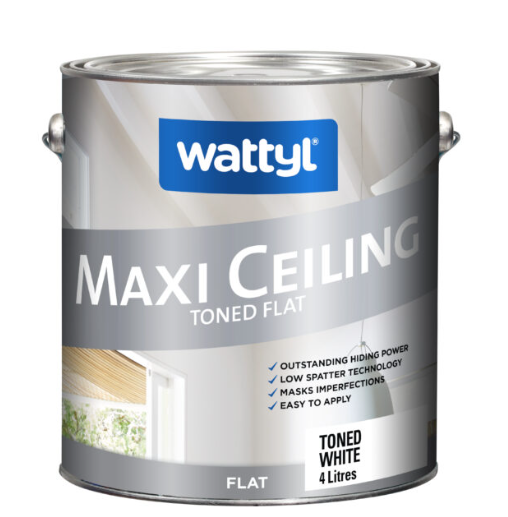
For most ceilings, BUFO Paint uses Wattyl Maxi Ceiling Flat, a product we’ve trusted for more than 20 years. Old-school painters still call it “Chandelier Flat,” a nickname from the days when Solver drums featured a chandelier on the label, long before Solver became part of Wattyl. The name has changed, but the performance hasn’t. Maxi contains a subtle hint of black pigment, which helps it cover exceptionally well while still reading as crisp white to the eye. The result is a smooth, even ceiling with a soft, elegant finish.
When ceilings are stained or discoloured, we first apply Zinsser Smart Prime to block water marks, smoke, soot, nicotine, and other stubborn stains. This fast-drying, water-based primer bonds beautifully to most surfaces and seals the problem areas so they don’t bleed through the final coats. Its quick curing time allows us to move confidently into top coats, leaving the ceiling looking clean, fresh, and consistent with the rest of the home.
One challenge we often uncover is ceilings that were never properly sealed during the original build. When that happens, the paint tends to sit on the surface instead of bonding into the plaster. We can spot this quickly by how fast the paint soaks in and flashes off as we roll. Symptoms can include cracking, peeling, bubbling, or surface crazing. Sometimes these ceilings show no visible issues at all until we apply additional coats. The added weight and surface tension can trigger problems that were always there, just waiting. This happens often enough that it's worth mentioning here as well as in our T&Cs. To peel off all the ceiling paint and start fresh is a mammoth effort and not allowed for in the average repaint quote.
And then there’s the act of painting ceilings itself. We don’t roll ceilings with our arms strained above our heads. That’s a fast way to get career-long bursitis. Instead, we use our whole bodies, starting from our feet, moving through our hips, with our shoulders locked and stable. The roller becomes an extension of the body. When it’s done right, it feels less like hard labour and more like a slow, steady dance across the room. Physical, focused, and oddly joyful. That’s probably why we love it so much.